Domaine Allegria

I am sorry, I have ignored my blog over the past couple of months. Blame a three week trip to Australia, and then the laziness of Christmas and New Year. However I did spend the final week of my Languedoc sojourn after Christmas visiting some vineyards, so with luck my blog will spring to life again!!
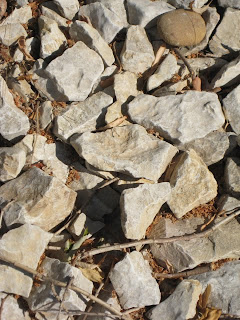
It had been a while since I had visited Domaine Allegria, which is one of the newer estates of the potential appellation of Pézenas. For the moment Pézenas is linked with Languedoc on the label, but if all goes well, the name will be able stand alone, possibly from the 2026 vintage. The INAO bigwigs were visiting in January. The key characteristic of Pézenas is its volcanic, basalt soil, which is the dominant soil of the villages around the historic town of Molière. Ghislain d’Aboville admitted that he had not realised the significance and unique character of basalt before he bought his vineyards. Other areas of volcanic soil include the Grand cru of Rangen de Thann in Alsace, Puy de Dome and Côte Roannaise. And why Allegria, It means joy or happiness in Occitan, which of course is what wine brings.
Ghislain made his first vintage in 2008 and his wines have evolved considerably since then. I asked him about the changes. Firstly, Cinsault has become a much more important grape variety, for red wine in particular, but our tasting began with:
La Haut sous les Cèdres, a Blanc de Noir de Cinsault, from Cinsault planted seven years ago in a lava flow. It has been kept in an amphora and was fresh and pithy with a marked saline note, that is characteristic of volcanic soil. 13.00€
Next came Cinsault Spirale, - 50€ - named quite simply because the vineyard is planted in a spiral. There are 600 vines, selected by massale selection, in a 30 ares plot, which were planted six years ago. Ghislaine said that he aspired to create a grand vin du sud, but was adamant that it would not be an extracted wine, but one with elegance. He wants to push the extremes of quality. In the vineyards, as there are no rows, each vine has a different orientation and therefore a slightly different ripening process, which adds complexity. Everything is hand done. and the wine is kept in jarres which come from porcelain specialists in Limoges - they are not porous like an amphora but 500 litre ceramic containers.
The colour was quite light, as you would expect with Cinsault, with fresh spicey aromas on the nose, and a peppery note on the palate. It was very elegant, and utterly delicious. A lovely example of just what Cinsault can do in the south. I was so excited that I ordered three bottles, for collection in the spring - it was not to be bottled for another month or so - when I hope Ghislaine will take me to see the vineyard.
The next Cinsault was Cinsault Abuelo, IGP Hérault – 14.50€ from a 1.50 hectare plot. This wine is made without any sulphur, what Ghislaine referred to as nature maitrisé. A controlled natural wine. The wine is aged in concrete vats, filtered and bottled in February. It was very perfumed on the nose and palate, with an elegant balance of acidity, tannin and fruit. Another lovely example of a pure Cinsault.
For Ghislaine, another significant change was the growing importance of rosé, but he had sold out, so there was none for us to taste. Instead, he continued to enthuse about the volcanic soil – nine of their eleven hectares are basalt. And all are farmed organically.
2024 Les Hautes Lumières, AOP Languedoc as Pézenas is only ever red.
50% Roussanne aged in demi-muids and 50% Marsanne aged in vat for nine months. White flowers on both nose and palate. Nicely rounded with an elegant dry finish.
2024 Le Bienveillant, Grenache Blanc, IGP Hérault – 25€
From a 30 ares plot acquired from an elderly neighbour who had clocked up 70 harvests. Their first vintage was 2020. And the wine is aged in demi-muids for ten months. The oak was still quite noticeable on the palate and was quite firm and solid with a streak of tannin. Ghislaine is considering ageing it a jarre instead.

2024 Les Petits Bonheurs, IGP Hérault. – 11.00€
A co-fermentation of Syrah and Grenache, picked together even though the difference in their ripening dates can be as much as 10 -15 days. Medium colour, with ripe Languedoc fruit and spice. Medium weight. Easy drinking with sufficient backbone.
2021 Tribu du Volcan, Pézenas – 15.00€
Made for the first time in 2019. The tribe refers to Delphine and Ghislaine’s five children. The oldest is 23 and married to an American carpenter, and the others are all still studying and all of them enjoy wine. A blend of 70% Syrah, kept in concrete, and 30% Mourvèdre, aged in older demi-muids. Ghislaine has given up on barriques. He thinks 600 litre barrels make for much better integration of the oaky flavours, but the downside is their weight – 80 kilos when empty – so they are very difficult to handle.
This was fresh and peppery, with satisfying structure and well-integrated oak. And very good ageing potential.
2020 Carignan IGP Hérault – 19.00€
Aged in concrete. Deep colour with quite a firm nose, with red berries and spice. Carignan on basalt apparently loses it rustic note, and this was certain nicely balanced, with rounded fruit and a streak of tannin. Nicely mouth filling. No sulphur does not work for Carignan. It needs to be controlled, otherwise it deviates, whereas Cinsault is less volatile. They add sulphur at bottling, but not during vinification
2021 Poivre Mourvèdre – 19.00€
Aged in demi muids. Medium colour. Quite a firm nose with some solid black fruit on the palate. Some notes of black pepper. Quite a full -bodied mouthful, combining texture, weight and elegance.
2022 L’Aventure, C’est l’Aventure – 20.00€
A pure Grenache Noir and a first vintage in 2020. The name, from a Claude Lalouche film, was inspired by the fact that three of their children were off on adventures abroad. The label is a luggage label. Aged in concrete. Quite perfumed liqueur cherries, typical of Grenache Noir. Good weight and mouthfeel with tannin balancing the fruit.
2022 La Belle Histoire, Pézenas – 30.00€
Their best plot of Syrah with a little Grenache. Aged in one new demi-muid and one of one wine. Quite a firm peppery nose, with black olives and pepper on the palate. An appealing freshness, with a firm streak of tannin. The wood fills out the mouth. It was a good note on which to finish.


Comments