Domaine de l'Accent

A morning with Konrad Pixner of Domaine de l'Accent, who, when asked how someone from the Alto Adige lands up in the Languedoc, replied 'that’s a long story'. But we had time to listen. He went to agricultural school, where there was a farm that did include a vineyard. University followed, economics with an emphasis on agriculture. Then came a Masters degree in wine with a group of 20 students comprising 16 different nationalities, during which he met his French compagne. The two years included time in Portugal, South Africa and Argentina and then he spent some time in New Zealand at Bell Hill. After that he joined the research institute in the Alto Adige and worked on a PhD on reductive flavours and how to prevent them. The classic red variety of the Alto Adige, Schiava or Vernatsch, depending on which language you are speaking, is particularly prone to reduction. First Konrad made a little wine locally - there was no tradition of vineyards in his valley - and then his girl friend wanted to move back to France - she comes from near Nimes, and so he decided in his early 40s that this was the moment to give up research and do his own thing.

The Terrasses du Larzac appealed. He dreamed of a small old vineyard of Carignan and in April 2017 found an abandoned plot of three terraces, or costas, totalling of three hectares. The vines had not been pruned for five years and he had no cellar. The idea was to stay small. But in 2019 he bought another five hectares of old abandoned vineyards, with very stony soil and low yields. First he rented a building in the nearby village of Arboras and then he built a streamlined cellar off the road between St Jean de Fos and Montpeyroux, which was ready for the 2025 harvest. In 2017and 2018 he made what he called garage wines, but since then he has expanded and replanted and now has 25 hectares. He makes wine from 12 - 15 hectares; one hectare goes to the coop and the remaining grapes are sold to local wine makers. You make a loss selling grapes, but it allows you to grow slowly.
The vineyards are farmed organically. Konrad does not have enough time to be biodynamic as his vineyards are very spread out, as we were to find at the end of our visit. He prepares the biodynamic composts but biodynamics is also a philosophy. It would be the cherry on the cake. His highest vineyards are at 350 metres. An observation from Konrad, that if you buy an estate, the vine choices have already been made for you, or you can gradually adapt and grow, adding different varieties, which gives you more flexibility.

Domaine de l’Accent was officially created in 2019. And why the name? 'I always have an accent irrespective of which language l speak', but he is understood in several languages and there is also the French expression mettre l’accent sur les bonnes choses.
And then we got down to tasting:
2024 Blanc de Noir 100% Mourvèdre, Vin de France - 13.00€. 11%
Konrad said he loves making white wine, but he only planted some white varieties in 2019. He had tried making white wine with Cinsault and Carignan, but Mourvèdre gives better mouthfeel. Fresh fruit on the nose. Fresh acidity and firm fruit and a saline note on the palate. Whole bunch pressed and only the first juice, which has more acidity and less colour. Research on pressing shows that the pH and the acidity can change very quickly after the first couple of hours. A little SO2.

2024 L’Accenteur, IGP St Guilhem - 15.00€
Actually the name of a small local bird. A blend of Carignan. Blanc and Bourboulenc, with drops of Marsanne, Carignan Gris, Vermentino. Grenache Blanc and Chenin Blanc. About 300 - 500 vines of each. Mostly harvested and vinified separately, using indigenous yeast. 40% fermented in oak. And kept in oak until April and then blended with the rest in inox.
A touch of oak on the nose. Well integrated on the palate. Elegant, rounded and textured. Then Konrad suggested that the biodynamic calendar did not rate the day a good one for tasting. I couldn't say that l was having any problems in detecting the nuances of Konrad’s wines, and was thoroughly enjoying them.
2023 Le Carignan Gris, IGP St Guihem, Les Intillères - the name of the specific plot - 27.00€
From a vineyard in Arboras, that is at least 70 years old but there are no documents to prove it. 80% Carignan Gris with a little Carignan. Noir and Blanc, all planted together. Carignan can mutate, turning grey or white on the same vine.
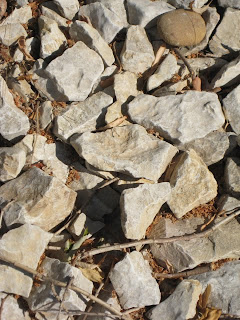
Vines grown on deep gravel, eroded soil with some clay. Fermented in 400 litre oak barrels, with 12 months ageing.
A little colour. Quite firm fruit on the nose, with some oak. Mouthfeel, weight, some structure, good acidity. Potential.
When Konrad began buying his first plots, the idea was to have some fun, but the project grew, and has become more serious and now he wants to make wines that reflect the potential of the Terrasses du Larzac. He enthused about the climate, the human factor, with a great variety of wine growers, who are open-minded and share experiences. It is a young appellation and a great terroir, producing the kind of wines that he likes, that are fresh and vertical and not full-bodied. He reckons that he has about 50 different fermentations, with variations of grape variety and plot. It has developed into quite a large range, but the economics also have to work.
2023 Una Notte - 11.50€ - 12%
Grenache Noir macerated for one night, le vin d’une nuit. Only in stainless steel tanks. Made for the first time in 2020 Harvested in the morning. Destemmed. Crushed and into a tank to begin the fermentation, and run off when sufficient colour is extracted. Light red in colour. Ripe spicy cherries on nose and palate. Fresh red fruit, and very drinkable. A hint of tannin and a little acidity.
2023 Le Petit Accent, Terrasses du Larzac - 12.90€
A blend of Grenache, Carignan, Cinsault and possibly Syrah and Mourvèdre.
No oak. Konrad works with the stems, keeping 60% stems, and crushes the berries. He is not a fan of carbonic maceration - 'you taste the technique not the terroir'. Carignan tends to develop oidium on the skins. And the Cinsault is not picked too ripe.
Medium colour. Red fruit. Quite fresh and fragrant. A little more body than La Notte. Lightly fleshy. Very good tension.
The stems give tannin, but not too much, providing texture, lowering alcohol and losing acidity.
2023 Cuvée Elliot,Terrasses du Larzac - 16.00€
Named for his son who was born in 2018. A wine to age. Good colour. Originally 80% Syrah and aged in new oak. Now although Syrah is the main variety, there is also Mourvèdre and Carignan, and less Grenache. 12 months in barrique, but not new. Good colour. Quite firm black fruit and oak. Quite a fleshy palate. with ripe tannins Savoury notes and nicely mouth filling.
2022 la Rocheuse, Terrasses du Larzac - 19.00€
From his highest vineyards. 60% Grenache, 30% Syrah and 10% Cinsault planted on limestone. 12 months in 500 litre barrels. No new oak. Low yields with just 5 - 12 hl/ha.
Deep colour. Quite firm and peppery on nose and palate, with spicy fruit. Medium weight. elegant and savoury with good length.
2023 Le Carignan Noir, IGP St Guilhem - 27.00€
From 70 year old vineyards in St. Guiraud. 12 months in 400 litre barrels. Good colour. firm red fruit on the nose and palate. Appealingly ripe fruit, with length, texture and complexity.
2019 Cuvée Elliot, Terrasses du Larzac
A different blend from the 2023 with Syrah and more Grenache, whereas the more recent vintages favour Mourvèdre. Deep colour. Quite smoky, sturdy oak. Quite tannic. Youthful, Firm oak. Interesting to see the evolution in winemaking in just four years. The 2023, although quite tannic, is more refined.

2024 Pét Nat - 13.00€
from Carignan Gris, from a plot next to the cellar. Only planted in 2021. Soft fruity nose, with fresh acidity and hints of honey on the palate. The wine is bottled before the fermentation is finished, with 16 gms/l residual sugar. Nothing is added to it, no yeast. The fermentation simply finishes in the bottle. Pét Nat is proving very popular.
And then we went on a magical mystery tour to see Konrad's vineyards. It was a sunny winter's day. They are definitely off the beaten track, with several different plots near Arboras and St Guiraud. Konrad talked about sowing different seed mixes, cereals, wild mustard and legumineux, which are flattened rather than mown. And he mulches the prunings to fix the nitrogen. If you mulch earlier, it is like fast food for the soil with more sugar; later is better. A tractor is well nigh impossible to use in these vineyards. And sheep graze there in winter. Konrad is trying to increase the organic matter, which helps retain water in the vineyards. I could quite see why he could not resist these vines.

Comments